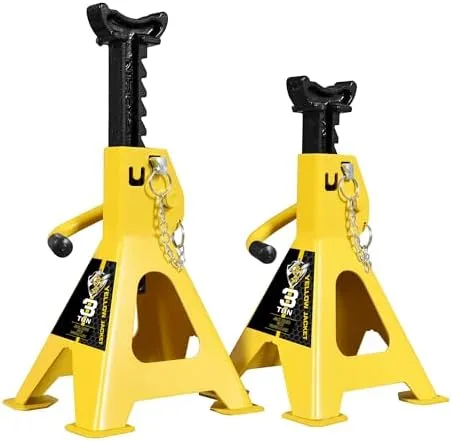
Pittsburgh Jack — Jack Stand
Pittsburgh Jack Jack Stands: Built for Home Mechanics Who Demand Professional Safety
Since 1977, Pittsburgh Jack has served a singular mission — delivering professional-grade automotive lifting equipment at prices accessible to every home mechanic and DIY enthusiast. Founded by Eric and Allan Smidt in Calabasas, California, the brand recognized that weekend warriors and garage hobbyists deserved the same safety standards as professional shops without the professional price tags. This commitment has driven nearly five decades of innovation in jack stand design and manufacturing.
The core audience for Pittsburgh Jack equipment includes home mechanics tackling brake jobs on Saturday mornings, weekend car hobbyists restoring classic vehicles, and professional technicians who need reliable backup equipment for their shops. These users share a common requirement: they need equipment that won't fail when a vehicle is overhead. Pittsburgh Jack delivers ASME-PASE industry standard compliance across its jack stand line, ensuring every product meets rigorous safety certifications.
What separates Pittsburgh Jack from competitors is the understanding that accessibility doesn't mean compromise. Heavy-duty steel construction with welded frames provides the structural integrity professionals expect, while competitive pricing ensures that safety equipment remains within reach for enthusiasts on any budget. The brand's ratcheting height adjustment systems and wide stable bases reflect decades of refinement based on real-world user feedback from garages across America.
From Compact Cars to Heavy-Duty Trucks: The Complete Support Collection
The Pittsburgh Jack lineup spans capacity ratings from 2 tons to 6 tons, addressing virtually every vehicle support scenario a home mechanic or professional technician encounters. Entry-level 2-ton stands serve compact cars and sedans perfectly, while the 3-ton category handles the majority of consumer vehicles including crossovers and mid-size SUVs. For those working on full-size trucks, heavy-duty SUVs, and commercial vehicles, the 6-ton models provide the substantial load-bearing capability required.
Height adjustability varies across the product range to accommodate different vehicle clearances and working preferences. Standard-profile stands typically adjust from approximately 11 inches to 17 inches, suitable for most stock-height vehicles. Low-profile variants start as low as 9.8 inches minimum height, specifically engineered for lowered sports cars and modified vehicles where traditional stands simply won't fit beneath the frame rails.
Each capacity class features multiple configuration options including single-lock and double-lock mechanisms, various base designs for different floor conditions, and finish options that resist corrosion in humid garage environments. This comprehensive approach ensures mechanics find exactly the right tool regardless of whether they're performing routine tire rotations or extended restoration projects requiring vehicles to remain supported for weeks.
The RAPID PUMP Philosophy: Engineering That Prioritizes Working Time
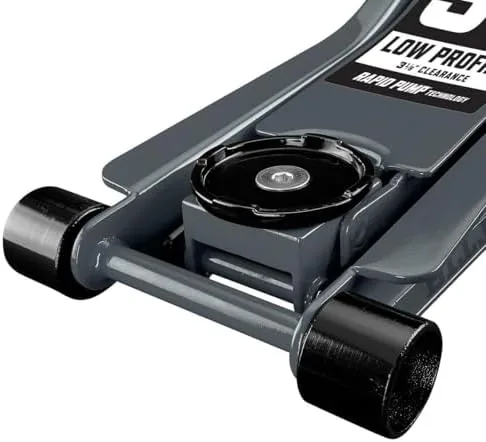
Pittsburgh Jack's engineering philosophy centers on the RAPID PUMP dual-piston hydraulic system, a technology developed to minimize the physical effort and time required to get vehicles safely elevated. While this system primarily applies to the brand's floor jacks, the same efficiency-focused thinking permeates their jack stand designs. Every component serves a purpose, and every design decision prioritizes the mechanic's workflow.
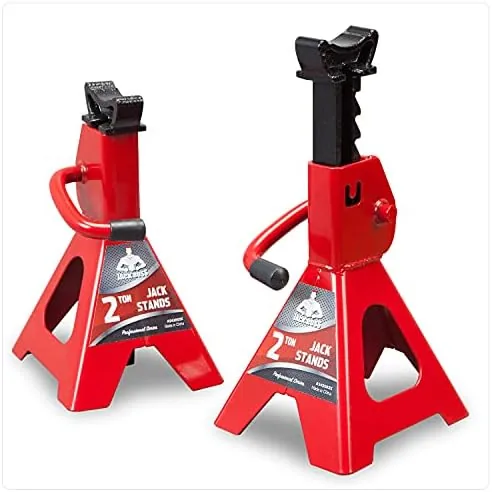
The ratcheting height adjustment mechanisms on Pittsburgh Jack stands exemplify this philosophy. Rather than using threaded pin systems that require removing and repositioning pins through multiple holes, the ratcheting design allows quick one-handed height changes. Mechanics simply lift the saddle to the desired position and the ratchet locks automatically. This saves minutes per positioning cycle, time that accumulates significantly across hundreds of tire changes and brake jobs.
Wide pyramid-style bases distribute load across larger floor areas, reducing point pressure on garage floors while providing exceptional stability on slightly uneven surfaces. The welded frame construction eliminates weak points that could develop in bolted assemblies over years of use. Tough powder-coat finishes resist oil, brake fluid, and other automotive chemicals that would deteriorate lesser coatings. Every element reflects the principle that professional-grade equipment should make work easier, faster, and safer.
Pittsburgh Jack Jack Stand Features That Define Reliable Vehicle Support
- Double-Locking Safety Mechanism Redundant locking systems engage both a ratchet pawl and a secondary pin lock, preventing accidental release even under shifting loads during brake or suspension work.
- Heavy-Duty Steel Construction Stamped and welded steel frames handle rated capacities with substantial safety margins, meeting ASME-PASE industry standards for automotive lifting equipment.
- Wide Pyramid Base Design Broad foot profiles distribute weight across larger contact areas, maximizing stability on concrete, asphalt, and gravel surfaces commonly found in home garages and driveways.
- Ratcheting Height Adjustment One-handed operation allows quick saddle positioning without removing pins, enabling faster setup and more precise height matching between multiple stands.
- Corrosion-Resistant Finish Durable powder-coat or enamel finishes withstand exposure to motor oil, brake fluid, coolant, and humidity, maintaining structural integrity and appearance over years of service.
- V-Saddle Contact Design Saddle geometry cradles frame rails and pinch welds securely, preventing slippage while minimizing stress concentration on vehicle contact points.
Top-Performing Models Trusted by Thousands of Garage Enthusiasts
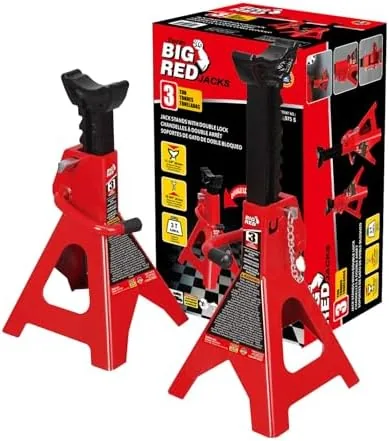
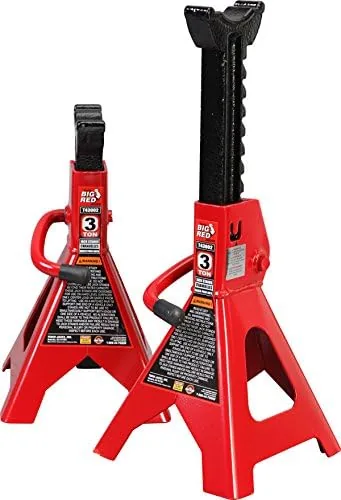
The BIG RED T43002A Torin Steel Jack Stands represent the workhorse of the lineup, offering 3-ton capacity in a double-locking configuration that satisfies the majority of home mechanic needs. These stands handle sedans, coupes, crossovers, and small SUVs with ease while the dual-lock system provides peace of mind during extended projects. The pair configuration ensures both axles receive proper support during comprehensive maintenance like brake jobs or suspension upgrades.
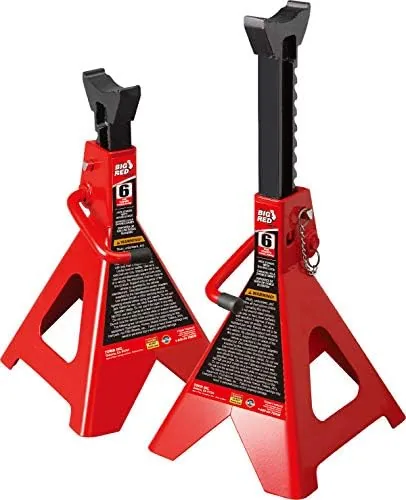
For mechanics working on heavier equipment, the BIG RED T46002A Torin Steel Jack Stands step up to 6-ton capacity per pair. This substantial rating accommodates full-size pickup trucks, large SUVs, and even light commercial vehicles. The same double-locking mechanism scales appropriately, and the wider height adjustment range — reaching up to 23 inches — accommodates the higher ground clearance typical of these larger vehicles.
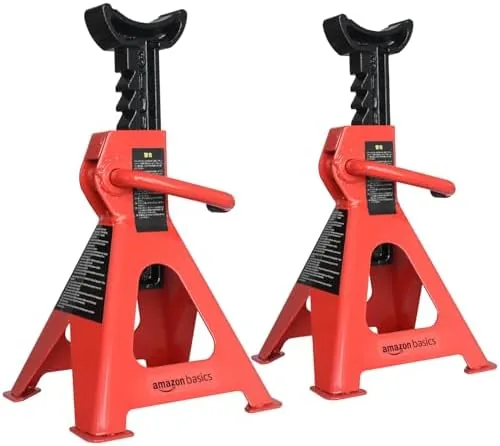
Budget-conscious users often gravitate toward the Amazon Basics Steel Jack Auto Stands, which deliver reliable 3-ton performance at exceptional value. These stands suit sedans and urban SUVs perfectly, providing essential safety support without premium pricing. For those with lowered vehicles, the Jack Boss Low Profile 2 Ton stands address a specific niche, starting at just 9.8 inches minimum height to slide beneath slammed suspension setups that defeat standard-profile equipment.
Stamped Steel, Welded Frames & Powder-Coat Protection
Pittsburgh Jack employs heavy-gauge stamped steel throughout its stand construction, a material choice that balances strength, weight, and manufacturing precision. Stamping processes create consistent part dimensions across thousands of units, ensuring that every stand leaving the production line matches the exact specifications required for rated load capacity. This consistency matters because safety equipment cannot tolerate manufacturing variance.
Welded frame construction joins stamped components into rigid assemblies without the potential loosening that threatens bolted connections. Every weld undergoes visual inspection, and critical load-bearing joints receive additional quality verification. The resulting frames handle not just static loads but also the dynamic forces that occur when vehicles shift during work, tools contact body panels, or mechanics bump supports while maneuvering underneath.
Surface protection comes from industrial-grade powder coat or enamel finishes applied after thorough cleaning and phosphate pretreatment. These coatings bond chemically to the steel substrate, creating barriers that resist penetration by motor oil, automatic transmission fluid, brake fluid, and the caustic compounds present in many automotive chemicals. The red, yellow, and black color options serve practical purposes beyond aesthetics. High-visibility colors help mechanics locate stands quickly in cluttered garages and identify whether equipment remains in position during work.
Stable, Secure, and Ready for Any Maintenance Task
Real-world performance of these stands consistently demonstrates the engineering decisions made at the design stage. Users report that the wide pyramid bases virtually eliminate tipping concerns even when applying torque to stubborn fasteners directly above the support points. Brake caliper bracket bolts, strut top nuts, and control arm bushings all require significant force to remove. Stable stands allow mechanics to work confidently without constantly checking that supports remain secure.
Durability testing by independent reviewers and long-term user feedback indicates that properly maintained stands easily exceed a decade of regular use. The powder-coat finishes show wear at contact points but maintain corrosion protection across structural surfaces. Ratchet mechanisms continue functioning smoothly with occasional lubrication, and the double-lock systems retain their positive engagement characteristics throughout extended service life.
Comfort during use comes from features that might seem minor until you spend hours beneath a vehicle. The smooth saddle edges don't catch on frame rails during positioning. Height adjustment requires minimal effort thanks to well-designed ratchet teeth. The substantial weight of quality steel stands paradoxically makes them easier to position precisely because they don't tip or slide during placement. These cumulative details transform a routine safety requirement into equipment that genuinely improves the working experience.
Maximizing Pittsburgh Jack Jack Stand Effectiveness in Your Garage
- Level Surface Placement Position stands on flat, solid surfaces like concrete garage floors. Avoid gravel, grass, or cracked asphalt that could allow bases to sink or shift under load.
- Proper Lift Point Contact Place saddles directly beneath manufacturer-specified jack points, typically reinforced frame rails or designated lift pads. Avoid thin floor pan metal or exhaust components.
- Matched Height Setting Adjust both stands to identical heights before lowering the vehicle. Uneven support creates unstable conditions and may stress body or frame components.
- Double-Lock Verification After ratcheting to desired height, visually confirm that both the pawl and secondary pin have engaged. Give each stand a firm shake before removing the floor jack.
- Jack Remains Nearby Keep the floor jack positioned beneath the vehicle at a secondary point, slightly unloaded, as an additional safety backup during all work.
- Storage and Inspection Store stands in dry locations to prevent moisture damage. Before each use, inspect for cracks, bent components, or damaged ratchet teeth that could compromise function.
Weight Ratings, Height Ranges, and Safe Working Practices

Understanding capacity ratings prevents dangerous misapplication of support equipment. When a stand displays a 3-ton rating, this typically represents the maximum load per individual stand. Supporting a complete axle requires two stands, meaning the pair handles up to 6 tons combined. However, a vehicle's weight isn't distributed equally front to rear. Engine placement significantly affects which axle carries more mass, so heavier-engine vehicles like V8 trucks require careful consideration of which stands support which end.
Height range specifications deserve equal attention during purchase decisions. A stand with 11-inch minimum height won't fit beneath lowered vehicles where frame rails sit 10 inches above the pavement. Conversely, maximum height matters for lifted trucks and SUVs where factory jack points may sit 18 inches or higher off the ground. The best practice involves measuring your vehicle's lift points before purchasing to ensure compatibility.
Safe practices extend beyond equipment selection to include work habits. Always lower vehicles slowly onto stands, watching for any shifting or settling. Never place body parts beneath a vehicle supported only by a hydraulic jack. Ensure the floor jack remains in contact with the vehicle as a backup while you work. These habits cost nothing to develop and provide protection against the rare equipment failures that even quality stands can experience.
Essential Equipment for Weekend Warriors and Dedicated Gearheads
Ideal Users
- Home mechanics performing routine maintenance
- Classic car restorers working extended projects
- Weekend hobbyists learning automotive skills
- Professional technicians needing shop backup equipment
- DIY enthusiasts on budget constraints
Primary Applications
- Tire rotations and seasonal changeovers
- Brake pad and rotor replacements
- Oil changes and fluid services
- Suspension component inspection
- Exhaust system access and repairs
Selecting the Right Jack Stand Capacity and Configuration
Choosing appropriate capacity starts with knowing your vehicle's gross weight and weight distribution. Compact cars and sedans rarely exceed 4,000 pounds total, making 2-ton or 3-ton stands perfectly adequate. Mid-size SUVs and crossovers typically weigh between 4,000 and 5,500 pounds, still within 3-ton stand territory for most applications. Full-size trucks, large SUVs, and vehicles with significant cargo or towing equipment regularly exceed 6,000 pounds, necessitating 6-ton capacity stands.
Configuration choices include single-lock versus double-lock mechanisms and standard versus low-profile height ranges. Single-lock stands function reliably for occasional use, but the redundancy of double-locking systems provides meaningful additional security for frequent users or extended projects where stands remain loaded for days or weeks. The modest price difference between configurations rarely justifies choosing less safety.
Low-profile stands serve a specific niche that standard equipment cannot address. If your vehicle sits lower than approximately 11 inches at the lift points, standard stands simply won't fit. Measure before purchasing rather than discovering the incompatibility after struggling in your driveway. For most stock-height vehicles, standard-profile stands offer the best combination of height range, stability, and value. Consider your current vehicle, any future vehicles you anticipate owning, and whether you regularly help friends or family with their maintenance needs when making capacity decisions.
Pittsburgh Jack vs. Competitor Jack Stand Performance Comparison
| Feature | Pittsburgh Jack / BIG RED | VEVOR | Pro-Lift |
|---|---|---|---|
| Capacity Range | 2 to 6 Ton options | 6 Ton primary | 6 Ton primary |
| Locking Mechanism | Double-locking standard | Double-locking | Double-locking with mobility pin |
| Height Range (6-Ton) | 14.2" to 23" | 14.2" to 23" | Standard range |
| Safety Certification | ASME-PASE compliant | CE certified | Industry standard |
| Construction | Stamped steel, welded frame | Stamped steel | Stamped steel |
| Low-Profile Options | Available (9.8" min) | Limited | Limited |
| Price Point | Budget to mid-range | Mid-range | Mid-range |
| Pair Availability | Standard | Standard | Standard |
Specifications based on manufacturer data for comparable 6-ton models. Actual performance may vary by specific model within each brand's lineup.
Keeping Your Support Equipment Ready for Every Job
- Post-Use Cleaning Wipe stands with a rag after each use to remove oil, grease, and brake dust. These contaminants trap moisture against steel surfaces and accelerate corrosion beneath protective coatings.
- Ratchet Mechanism Lubrication Apply light machine oil or white lithium grease to ratchet teeth and pawl pivot points every few months. This maintains smooth operation and prevents rust formation in the mechanism.
- Storage Environment Store stands in dry locations away from direct moisture exposure. Hanging storage or elevated shelving prevents contact with damp garage floors that promote rust.
- Pre-Use Inspection Before each use, check for cracks in welds, bent frame components, damaged teeth, and proper pawl engagement. Retire any stand showing structural damage regardless of apparent severity.
- Load Testing Periodically test stands by loading them with slightly more than their rated capacity using controlled conditions. Any deflection, unusual sounds, or visible stress indicates retirement time.
- Finish Touch-Up Address chips and scratches in powder coat with rust-preventive paint to maintain corrosion protection. Small investments in maintenance extend equipment life significantly.